
At CIMIE 2017 (29–30 June), Professor Esther Oliver presented research being conducted at CREA on the invisibilisation of one of the women who contributed most to the transformation of Bilbao. That same month, 27 adults walking through the area had been asked: “Do you know the name of this park?” Only one person did not. However, when asked, “Do you know any of the things Doña Casilda did?”, 20 of the 27 respondents said they did not.
This lack of awareness is significant, given that she was wholly or partly responsible for the following improvements: Basurto Civil Hospital, the University of Deusto, the Arriaga Theatre, the park that bears her name, the Casa de Misericordia, and several schools for the working classes. It is also significant that the only seven people who knew about any of her achievements were older adults. The fact that younger people were unaware of them indicated that the media and the education system were contributing to this invisibilisation.
A highly illuminating debate, conducted in a very dialogic manner by all those involved, took place during that session. Faced with clear evidence of her contribution, one of the feminists present said, in a very good-natured tone, that it annoyed her to have to acknowledge it and that she was going to investigate where Casilda’s fortune had come from. Another feminist pointed out that it was significant that we wanted to search for some dark origin of her wealth in order to exclude her from feminism, while seeing no problem with Virginia Woolf, even though we knew that her family’s wealth came from British imperialism in India. The person who had raised the issue replied: “Touché.”
Just five months later, a seated statue of her was installed in her park. A bust had already stood there since 1906 as part of the monumental composition created by Agustín Querol. In 2008, on the bicentenary of her birth, the City Council promoted two research projects. In 2019, the Bilbao 700 Foundation published the first modern biography of her. That same year, the City Council and the Sabino Arana Foundation organised a series of lectures. This process continued until, in 2025, an international scientific article was published and received significant media coverage in articles such as “Casilda Iturrizar, the Forgotten Feminist” in Deia, “Remembering Casilda Iturrizar” by Osakidetza, and “Scientific Research Recovers the Figure of Casilda Iturrizar, Doubly Invisibilised as a Woman and a Conservative” in Diario.es.
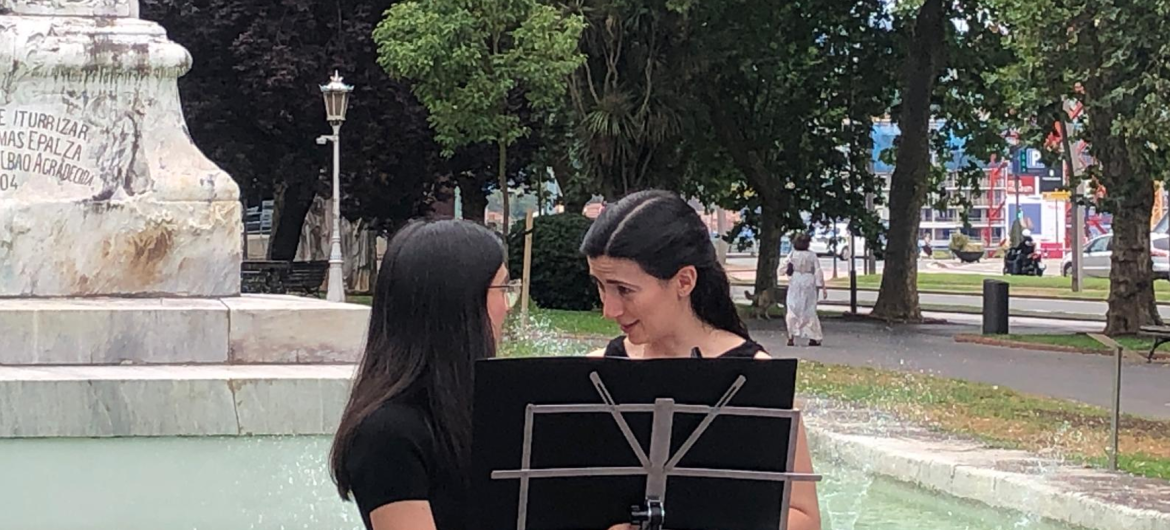
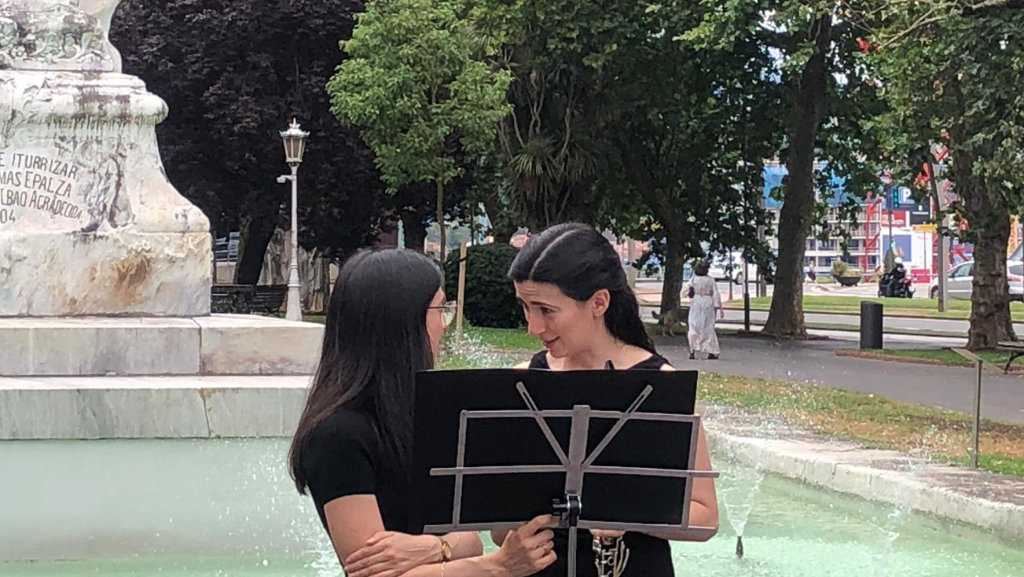
On July 3rd, at 2 p.m., CIMIE26 paid tribute to her at the seated statue, including a performance of Mirentxu by Gudiri, whose recordings included the voices of children whose education was supported by Casilda Iturrizar.
👀 Visitas: 136
